
Presupuesto
Un presupuesto es un plan, no un castigo.
Veinte minutos con números reales valen más que un año preguntándote adónde fue el dinero. Empieza con el Constructor, elige un método que se adapte a tu forma de pensar y ajusta las categorías más grandes.
Empieza aquí
 Empieza aquí · 6 guía de min
How to Make Your First Budget
Empieza aquí · 6 guía de min
How to Make Your First Budget
A working budget in 20 minutes, using last month's real numbers.
Add up your monthly take-home pay, subtract your bills and essentials, then give every remaining dollar a job: spending, savings, or debt. Written down beats remembered. Our... Leer la guía →
5 guía de min
How Much Should You Spend on Rent?
The 30% guideline, what counts as cost-burdened, and what to do when your city laughs at both.
Leer la guía →
4 guía de min
The 50/30/20 Budget, Explained
One line of arithmetic that gives every dollar a lane.
Leer la guía →
6 guía de min
How to Lower Your Electric Bill
The five changes that actually move the number, and the assistance that exists when they're not enough.
Leer la guía →Creador de presupuesto
Ingresos menos gastos, proporciones por categoría, observaciones amables. Imprímelo o guárdalo, sin cuenta.
Créalo ahora →Todos los temas de presupuesto, en lenguaje sencillo
Filtrar por tema ▾
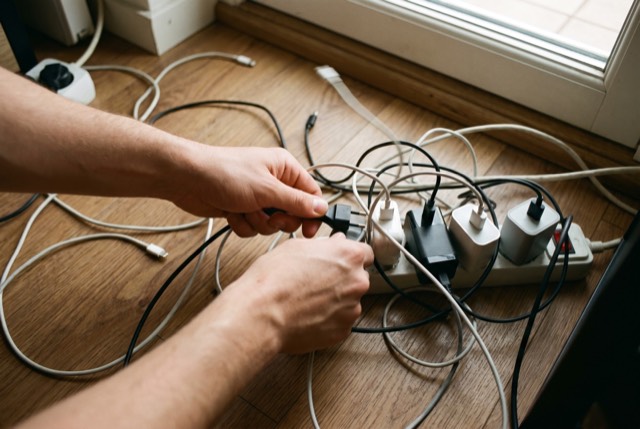
Cut Your Monthly Expenses
The order matters: start with cuts you'll never feel (billing, rates, forgotten charges), then habits, and only then...
Cutting costsGetting started Abrir →
Budgeting Methods: Pick One That Fits Your Brain
There is no correct method, only the one you'll still use in March. All of them do the same job: decide where money...
MethodsGetting started Abrir →
Monthly Budget Examples
Three realistic households, three workable budgets. Numbers are worked examples to copy and adjust, not prescriptions.
Getting startedPlanning ahead Abrir →
Needs vs. Wants: The Honest Version
The category isn't the item, it's the version of the item. Food is a need; $19 delivered poke is mostly a want...
Getting startedMethods Abrir →
Fixed vs. Variable Expenses
Fixed expenses are decided rarely and charged always; variable expenses are decided constantly. Each type has its own attack.
MethodsBills & home Abrir →
Housing Costs: The Biggest Lever
Housing is usually the largest budget line, which makes it the most powerful one to optimize, and the most important...
Bills & homeCutting costs Abrir →
Food: Eat Well, Spend Less
Food is the most flexible big line in the budget, the one where planning beats discipline every single week.
Food & daily lifeCutting costs Abrir →
Transportation: The Second-Biggest Line
Cars cost far more than their payment. AAA's annual driving-cost study puts average new-car ownership above $12,000...
Bills & homeCutting costs Abrir →
Utilities: Electric, Gas, Internet, Phone, Water
Five bills, five playbooks, and assistance programs behind each of them when the month breaks.
Bills & homeCutting costs Abrir →
Insurance: Pay for Protection, Not Inertia
Insurance pricing punishes loyalty and rewards shoppers. The coverage you need is personal; the discipline of...
Bills & homePlanning ahead Abrir →
Subscriptions: The Quietest Leak
$19.99 a month doesn't sound like much. It's $239.88 a year and about $1,199 over five years, and most households...
Cutting costs Abrir →
Sinking Funds: Kill the 'Surprise' Bills
Car repairs, holidays, registration, back-to-school: not surprises but appointments. A sinking fund saves 1/12 of...
Planning aheadMethods Abrir →
Pay Yourself First: Savings as a Bill
Treat savings, both emergency fund and retirement, as the first bill of the month, not the leftovers. Leftovers have...
Planning aheadGetting started Abrir →

20 consejos de presupuesto que sobreviven la vida real
Los ocho más importantes primero; el resto se abre cuando quieras verlo.
A budget on the back of an envelope beats a perfect one in your head. Income at the top, bills below, what's left at the bottom.
Ten minutes before the 1st decides where money goes; doing it on the 20th just records where it went.
Pull your actual statement instead of guessing. Most people find $50-$200 of spending they forgot existed.
Rent, groceries, gas, savings: when each dollar is assigned, 'extra' money stops evaporating.
Move savings out on payday, even $10, before spending starts. What stays in checking gets spent.
If you're paid every two weeks, plan each check separately: this check covers rent, the next covers insurance and groceries.
Housing, basic food, utilities, transport to work, medicine: needs. Upgrades of each: wants. Both belong in the budget, labeled.
Car registration, school supplies, holidays. Divide the yearly total by 12 and set that aside monthly so December stops being a crisis.
Mostrar la otra opción 12 ▾Mostrar menos ▴
A budget with zero joy fails by week three. Even $20 of guilt-free spending keeps the whole plan alive.
Anything unplanned over about $50 waits a day. If you still want it tomorrow and it fits the plan, buy it without guilt.
One coffee-length review of what's left in groceries and what's coming prevents the month-end surprise.
Estimate a $87 bill as $90 and a $1,240 paycheck as $1,200. The rounding gap quietly becomes cushion.
Autopay minimums and automatic transfers do the discipline for you. You supervise; the bank remembers.
Fifteen minutes monthly with a shared list beats a year of separate assumptions. One page, two people, no blame.
You don't need 40 categories. Watch the two or three where money actually disappears: usually food, rides and impulse buys.
That $95 renewal in March is only a surprise if the budget pretends it doesn't exist. List every yearly charge once.
If takeout is your leak, load a set amount on Friday. When it's gone, it's gone. No willpower required.
New job, new baby, new rent: the old plan is obsolete, not broken. Redo it in ten minutes rather than abandoning it.
One account where bills autopay, one card for everyday spending. The rent can no longer be accidentally eaten by groceries.
One expensive Tuesday doesn't fail a budget. What matters is where the month lands; adjust and keep going.
20 formas de reducir gastos
Scan two months of statements for recurring charges. The average household finds $20-$60 a month it wasn't using. Más sobre esto
Ask for the current promotional rate or the retention department. A ten-minute call commonly saves $15-$30 a month.
Loyalty rarely pays here. Comparing three quotes at renewal often finds $300-$600 a year for identical coverage.
Prepaid carriers run on the same networks. Moving a $70 line to a $25-$40 plan saves $360-$540 a year.
Swapping four $15 takeout meals for $4 home versions saves roughly $44 a month, over $500 a year.
Flour, rice, beans, cleaning supplies and medicine basics are usually 20-40% cheaper with the store label, often from the same factories.
Deciding dinners after seeing what's discounted, not before, trims a typical grocery bill 10-20%. Más sobre esto
Americans throw away roughly a quarter of the food they buy. Bread, meat and leftovers freeze; waste is the most invisible grocery cost.
Mostrar la otra opción 12 ▾Mostrar menos ▴
Keeping the Friday treat and home-brewing the other days turns a $4.50 habit into about $90 a year instead of $1,100.
Each degree of winter heating costs roughly 1-3% of the bill. A programmable thermostat pays for itself in one season. Más sobre esto
Consoles, TVs and chargers draw power off. A $10 switching power strip trims a few dollars every month, forever.
Most laundry energy heats water. Cold cycles plus an occasional drying rack can save $50-$100 a year.
If bills are a struggle, utility assistance programs and payment plans exist in every state. Más sobre esto
Once you hold $1,000 in savings, moving deductibles from $250 to $1,000 can cut premiums 10-30%.
Rotate one service at a time and finish its shows. Three services all year is about $500; one at a time is about $180.
Books, audiobooks, streaming via library apps, museum passes, even tools in some cities, already paid for by your taxes.
Kids' clothes, exercise gear, furniture: buying at 30% of retail for things used briefly is the easiest discount that exists. Más sobre esto
If your credit improved since the loan started, refinancing a high-rate auto loan can save $20-$60 a month.
At IRS-estimate driving costs (about 70 cents a mile in 2025), skipping 100 commute miles a week saves real money, not pocket change.
Ask for an itemized bill, check it, then ask about self-pay discounts and payment plans. Hospitals settle for less more often than people expect. Más sobre esto