
Guardar
Los ahorros crecen en capas, no de golpe.
Desde los primeros $100 hasta un fondo de emergencia completo y más allá, cada peldaño es una mejora real en seguridad, y cada uno tiene su propio plan de acción.
La escalera del ahorro
Cada paso es una página; toca el peldaño que estás subiendo.
Guías para cada peldaño
 Empieza aquí · 7 guía de min
How to Save $1,000
Empieza aquí · 7 guía de min
How to Save $1,000
The first thousand is the hardest and the most life-changing. Here's the realistic route.
Open a separate savings account, automate a transfer you won't feel ($20-$50 per payday), add one expense cut and one small income boost, and bank every windfall by rule. At... Leer la guía →Filtrar por tema ▾

5 guía de min
How Big Should Your Emergency Fund Be?
Size it to your real essential month, not to a slogan.
Leer la guía →
5 guía de min
What Is a Money Market Fund?
And how it differs from the money market account at your bank.
Leer la guía →
Your First $100: Start Here
The first $100 is not about the money; it's about becoming a person who has savings. Every later milestone reuses...
First stepsMilestones Abrir →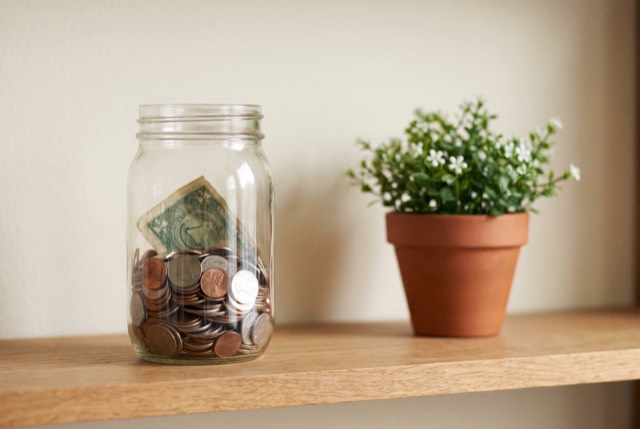
Your First $500: The Small Cushion
$500 covers the most common real-life emergencies: a tire, a copay, a fridge repair. That means $500 is where payday...
First stepsMilestones Abrir →
One Month of Expenses: Real Runway
With one full month of essentials banked, a missed paycheck, a gap between jobs, or a slow freelance month becomes a...
Milestones Abrir →
3-6 Months: The Full Emergency Fund
This is the classic 'financial security' milestone: a layoff, an injury, or a family crisis can be handled with...
Milestones Abrir →
Where Savings Can Live: Every Account Type
Same dollars, very different treatment. What matters: is it insured, what does it pay, and how fast can you reach...
Where to keep it Abrir →
Saving vs. Investing: Different Jobs
Saving keeps money SAFE for the near future; investing puts money AT RISK for long-term growth. Both are right, for...
Investing nextWhere to keep it Abrir →
Beyond the Emergency Fund: First Steps Into Investing
Educational orientation, not advice: what the pieces ARE, so any next conversation, with reading, a fiduciary...
Investing next Abrir →

20 ideas de ahorro que de verdad se mantienen
Small and automatic beats large and occasional: $10 every Friday is $520 a year without a single hard decision. Más sobre esto
Money you can see in checking is money you will spend. A separate account, ideally at a different bank, adds one day of friction.
Online savings accounts often pay several times the big-bank average. Same federal insurance, better rate. Más sobre esto
Schedule the transfer for the morning your paycheck lands. You can't miss money you never saw.
When pay goes up 3%, keep living on the old number and bank the difference. Painless by definition: you never had it.
Tax refund, rebate, birthday cash: decide in advance that half goes to savings. The rule does the work when excitement hits.
Groceries and bills only, one week. Most people bank $30-$80 and learn which purchases they didn't miss.
Finished paying off a $250 car loan? Keep paying it, to your savings account. The budget already survives without it.
Many banks sweep card purchases up to the next dollar into savings. It's only $15-$40 a month, which is the point: invisible.
'Emergency fund' and 'Winter tires' get funded; 'Savings 2' gets raided. Specific names create real reluctance to steal from them.
Saving 5% of income now? Set a reminder to make it 6% in three months. One percent is never the reason a month fails.
No debit card attached, one transfer day away. Fast enough for a real emergency, slow enough to stop a Tuesday impulse. Más sobre esto
Bought the $60 shoes instead of the $90 pair? Move $30 to savings, or the discount never actually existed.
Save $1 in week one, $2 in week two, up to $52. That's $1,378 in a year, and the hard weeks come after the habit forms.
A steady $20-$100 a month from decluttering funds a starter emergency cushion by itself. Más sobre esto
Most employers will send part of each paycheck to a second account. The cleanest automation there is; ask payroll.
Money needed in 12 months can sit in a certificate of deposit paying more than checking, with a known date and a known rate. Más sobre esto
Every time you spend on a want, move 10% of that amount into savings. Spending $40 on games? $4 to the fund. Painless, proportional, automatic.
A jar chart on the fridge is not childish; it's effective. Progress you can see is progress you protect.
$100, $500, $1,000, one month of expenses. A ladder of near targets beats one distant number. Más sobre esto